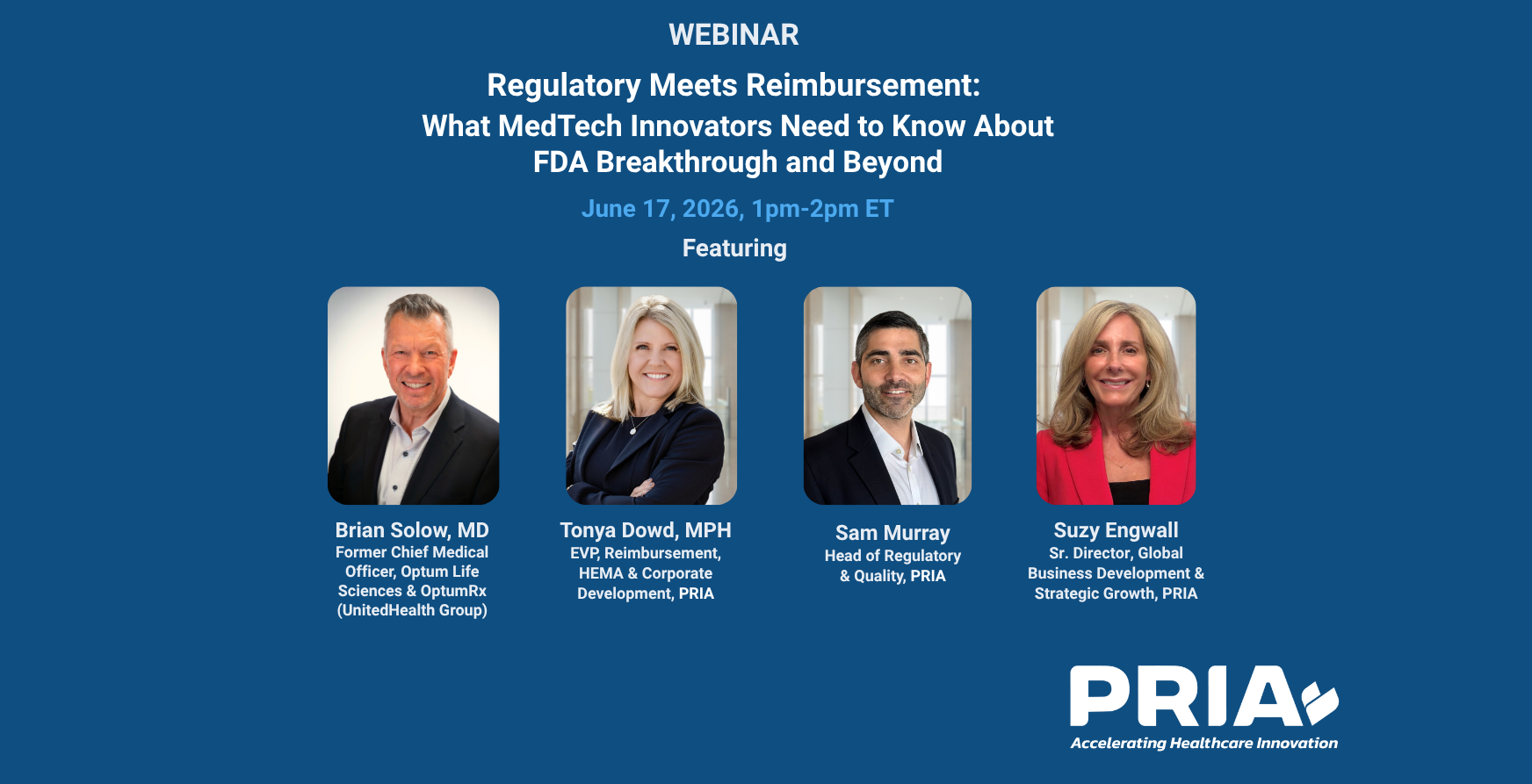
Under the Same Sky - Where Regulatory Meets Market Access
CMS + FDA just announced RAPID. What does this mean for your new device’s pathway?
The new Regulatory Alignment for Predictable and Immediate Device (RAPID) program aims to accelerate Medicare access for certain Breakthrough Devices by aligning FDA approval and CMS coverage earlier in development.
This new coverage pathway is another strong signal that Breakthrough designation still matters, and in some ways, matters even more now. As we wrote in our recent post on the value of Breakthrough, the real upside was never just NTAP. It was earlier alignment, earlier feedback, and earlier visibility into what evidence will matter downstream. RAPID builds directly on that idea by bringing CMS into the process earlier, and linking Medicare coverage more closely to FDA development and review.
And, RAPID looks like one more step toward a world where regulatory and reimbursement planning have to happen together from the beginning, not one after the other.
A step in the right direction, however, still limited in scope
For now, this program is for Breakthrough Devices that address unmet medical needs among Medicare beneficiaries, and is available for certain Class II devices participating in the FDA Total Product Life Cycle Advisory Program (TAP), and Class III devices regardless of whether they are participating in TAP. To be eligible for the RAPID coverage pathway, devices must be the subject of an Investigational Device Exemption (IDE) study that enrolls Medicare beneficiaries and studies clinical health outcomes agreed upon by the FDA and CMS.
Early alignment on evidence that matters for Medicare
Through the RAPID coverage pathway, CMS will now be a part of the early and frequent engagement between the FDA and device innovators. The coverage pathway will link manufacturers to CMS experts early in development to understand what clinical outcomes are most relevant for Medicare beneficiaries.
This coordinated approach allows CMS and the FDA to rely on premarket evidence to inform both the FDA premarket review and Medicare coverage processes. Aligning evidence expectations earlier reduces duplication, improves efficiency, and provides increased transparency to innovators.
Regulatory considerations
CMS says the current path from market authorization to Medicare coverage can take about a year or more. In practice, companies often feel that gap much longer, especially when the evidence package was designed only for FDA, and not with future coverage in mind. RAPID is clearly meant to reduce that disconnect by allowing CMS and FDA to align earlier on the clinical outcomes that matter for Medicare beneficiaries and by targeting coverage as soon as about two months after authorization for eligible devices.
That does not make development easier. It likely means some IDE studies will need to carry more weight than they otherwise would, if a company wants both authorization and faster coverage. CMS says eligible devices must be in an IDE study that enrolls Medicare beneficiaries and studies clinical outcomes agreed upon by both FDA and CMS. That may push some sponsors to build endpoints or study elements that FDA alone might not have required.
However, if your target population is largely made up of Medicare beneficiaries, this is exactly the kind of tradeoff worth making. At the end of the day, clearance or approval is only part of the story -- what matters is getting paid.
In conclusion
The RAPID Program could be meaningful… but it’s far from a complete solution. And, it reinforces that regulatory and reimbursement planning should happen concurrently from the beginning, not consecutively.
PRIA is actively tracking how this evolves and what it means for clinical strategy, coverage, and payment pathways. If you’re thinking about how RAPID may impact your development or market access strategy, let’s talk.
Please reach out to our team if you'd like to discuss RAPID.
Click the Icon below to share this with your network